The Blueprint for a High-End Master Suite Conversion in Central Connecticut
When homeowners in Central Connecticut search for bathroom remodeling, they are often bombarded with surface-level advice about paint colors and cabinet hardware. However, a true luxury master suite conversion is a highly technical construction project. It requires a deep understanding of structural engineering, advanced waterproofing science, and local building codes. This comprehensive guide breaks down the exact methodologies and materials required to execute a flawless, high-ROI bathroom transformation in 2026. Whether you are expanding an existing footprint or completely gutting an older master bath, the difference between a project that lasts five years and one that lasts fifty years lies behind the drywall and under the tile.Core Anatomical Components of a Modern Spa-Grade Bathroom:
- Advanced Radiant Floor Heating
- Structural Reinforcements for Heavy Fixtures
- Precision-Engineered Curbless Walk-In Showers
- Code-Compliant Lighting and Electrical Systems
- Aggressive Moisture Management and Ventilation
Defeating New England Winters: Advanced Radiant Floor Heating
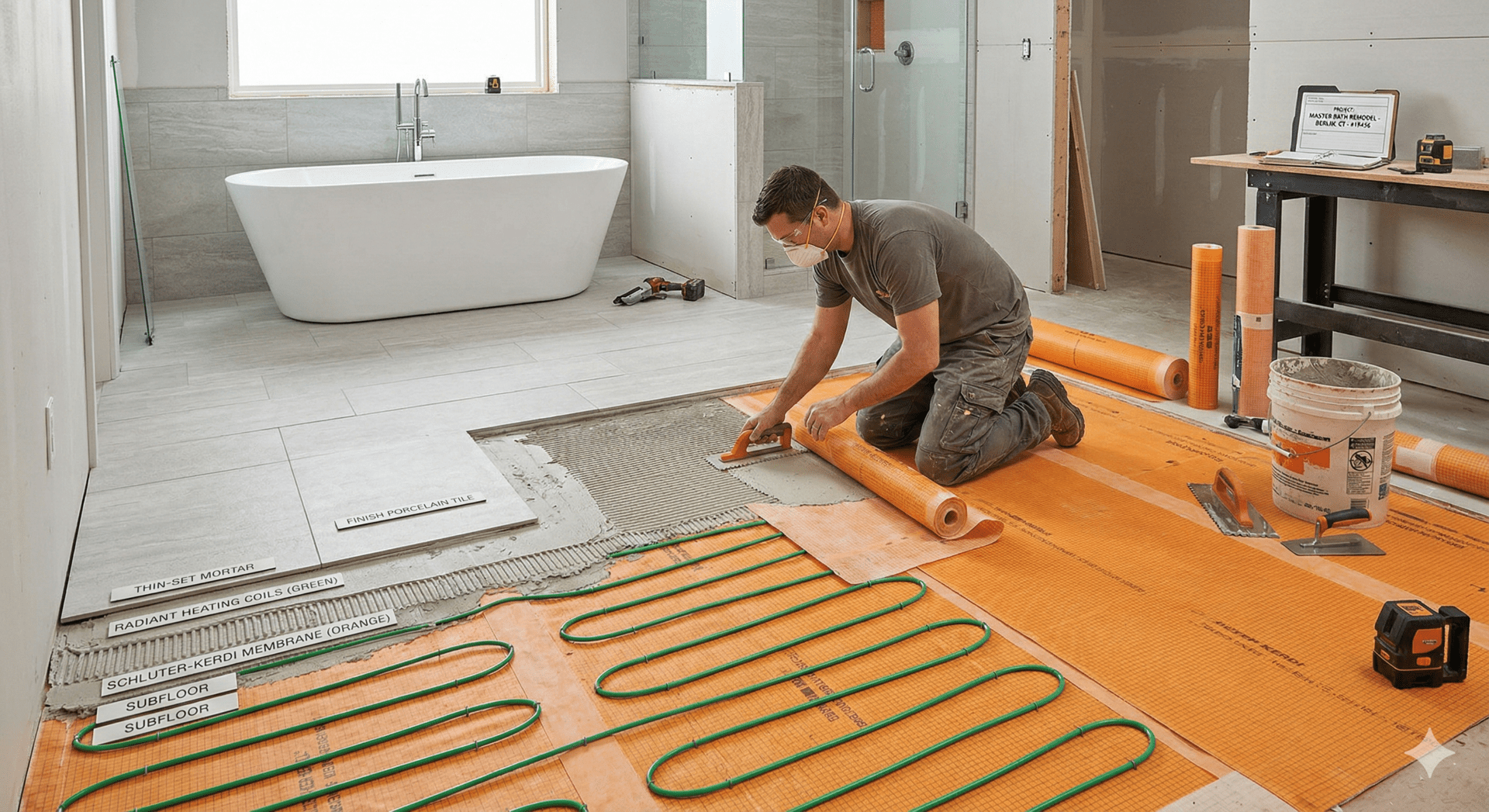
- Cable Management: It holds the heating cables securely in place at exact intervals for perfectly even heat distribution.
- Fracture Prevention: It absorbs the microscopic movements of the home's wood framing. By neutralizing these shifting forces, the uncoupling membrane prevents the rigid tile and grout from cracking over time.
Pro Tip: To maximize energy efficiency, a thermal break is recommended below the heating elements to push the heat upward into the room rather than allowing it to dissipate into the floor joists below.
Structural Engineering for Luxury Fixtures
Modern bathroom designs frequently feature massive architectural elements, most notably the freestanding soaking tub. While a cast-iron or stone-resin tub creates a stunning focal point, it also introduces significant static and dynamic loads to your home's framing. A standard residential floor is typically engineered to support a live load of 40 pounds per square foot. A freestanding tub filled with 60 gallons of water and a bather can easily exceed 800 pounds concentrated in a very small footprint. Before installation, a qualified contractor must assess the floor joists to ensure they meet the L/360 deflection standard required for natural stone and heavy fixtures. In many older Central Connecticut homes, this requires "sistering" the joists. Sistering means bolting additional structural lumber alongside the existing joists to double their load-bearing capacity and prevent structural sagging.The Science of Curbless Walk-In Showers
Advanced Waterproofing Protocols
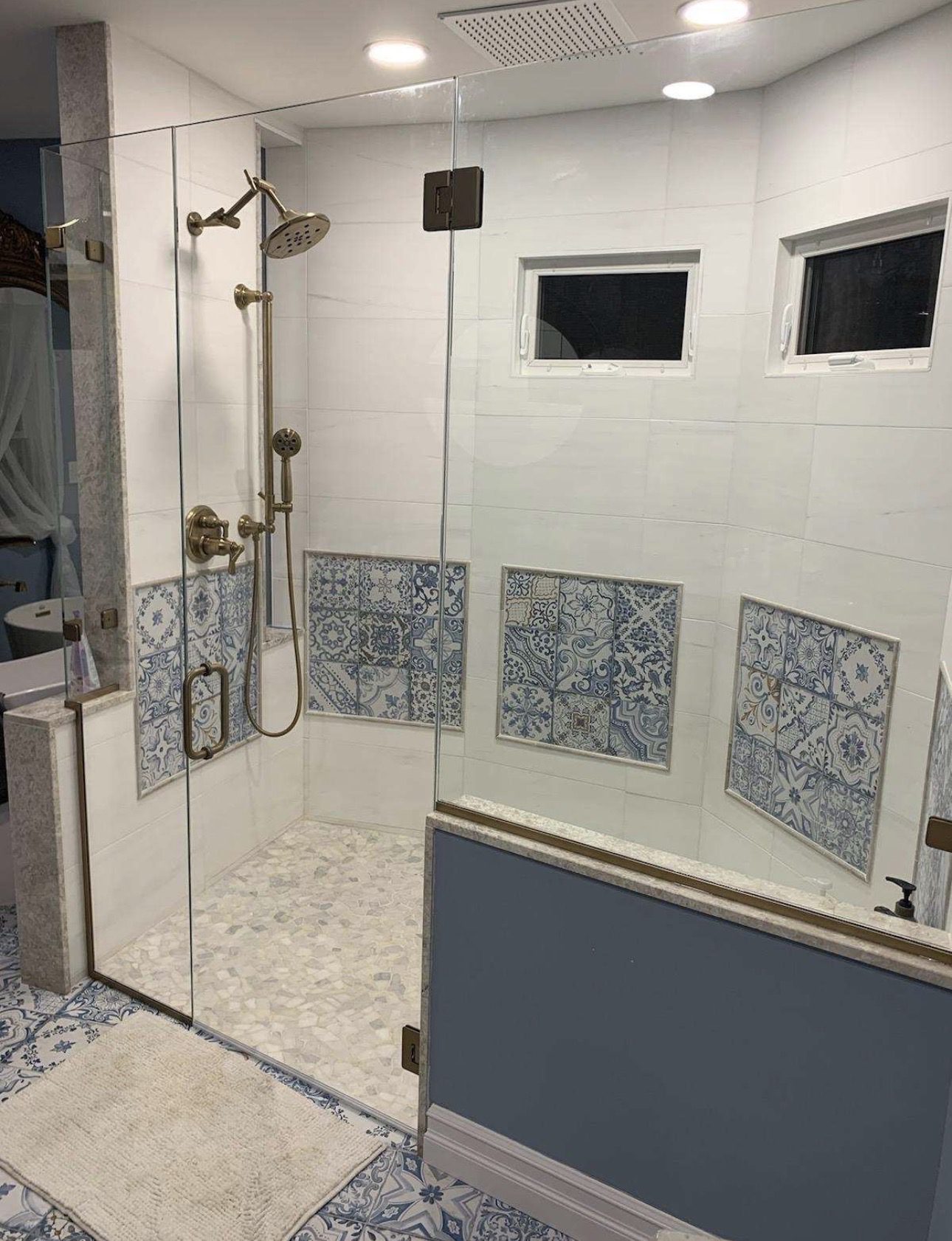
Traditional shower construction relied on a PVC pan liner buried under a thick mud bed. This method often led to trapped moisture and eventual mold growth due to capillary action. Today, we utilize surface-applied waterproofing membranes, such as the orange Schluter-Kerdi system visible in the installation phase.- Vapor Permeance: These modern membranes have a highly restricted perm rating, meaning they stop water vapor dead in its tracks. This is an absolute building code requirement when installing a sealed steam shower.
- Seamless Integration: The membrane is applied directly over the wall board and shower pan using unmodified thin-set mortar, creating a completely watertight envelope before a single piece of tile is installed.
- Linear Drain Systems: To accommodate large-format porcelain tiles in a shower floor, a linear drain is essential. Unlike a center drain that requires the floor to slope in four directions, a linear drain only requires a single, flat slope, allowing for continuous tile flow from the bathroom floor directly into the shower basin.
Material Selection Matrix for High-Moisture Environments
Choosing the right materials dictates both the aesthetic appeal and the long-term maintenance requirements of your new space. Here is a technical breakdown of popular surface materials for high-moisture environments.| Material Type | Porosity and Water Absorption | Maintenance Requirements | Ideal Application |
|---|---|---|---|
| Porcelain Tile | Impervious (Less than 0.5%) | Low. No sealing required. | Shower floors, main flooring, wet walls. |
| Natural Marble | High. Susceptible to staining. | High. Requires strict bi-annual sealing. | Vanity tops, accent walls (outside direct water flow). |
| Quartz (Engineered) | Non-porous. Highly resistant. | Low. Wipe clean. | Countertops, shower benches, thresholds. |
Mastering Bathroom Lighting and Electrical Code
A luxury bathroom relies heavily on a layered lighting strategy. We must calculate the Color Rendering Index (CRI) of the LED fixtures. A CRI of 90 or higher is required at the vanity to ensure skin tones look natural when applying makeup or shaving. We break lighting down into three dedicated zones: task lighting at the mirrors, ambient recessed lighting for the general space, and IP65-rated wet-zone lighting for inside the shower enclosure. Electrically, modern bathrooms draw significant power. Radiant heating floors, towel warmers, steam generators, and high-draw hair dryers cannot operate on a single circuit. A proper remodel includes running multiple dedicated 20-amp circuits back to the main breaker panel to ensure flawless, trip-free operation, adhering strictly to the latest National Electrical Code (NEC) updates.Moisture Management and Mechanical Ventilation
Navigating the Remodeling Process in Central Connecticut
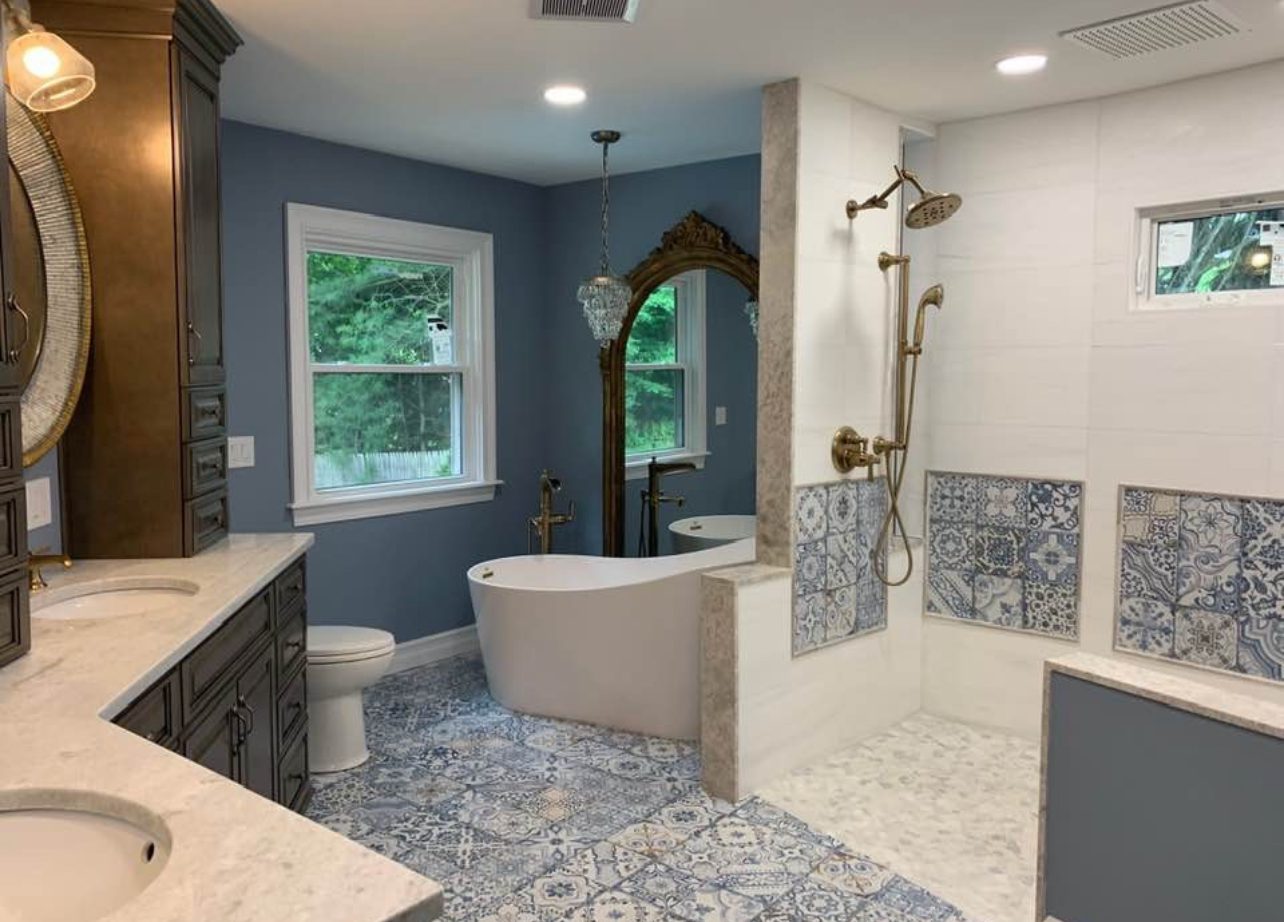
When engineered correctly, a master suite conversion offers an exceptional return on investment. It fundamentally changes how you experience your home and how potential buyers view the property. If your current bathroom footprint is too small to accommodate a luxury shower, a double vanity, and a soaking tub, you may need to look at expansion options. You can learn more about how we handle the complex zoning and foundation requirements for these expansions in our guide on The ROI of Home Additions in Berlin CT. If you are looking for a complete overhaul, we strongly advise partnering with a team that handles the structural, mechanical, and design elements under one roof. Our primary Bathroom Remodeling Service Hub details our full process, from the initial 3D design phase to the final plumbing inspections.Ready to Transform Your Berlin CT Home?
A successful remodel requires a contractor who understands the unseen structural, plumbing, and electrical requirements just as well as the final aesthetic finishes. Do not settle for a surface-level refresh when your home deserves a deeply engineered transformation. From custom vanities to fully integrated smart home spas, we build spaces meant to last.
Take the first step toward your dream bathroom today. Contact Central Connecticut Building and Remodeling at 860-740-6473 or visit our Contact Page to schedule your free, no-obligation design consultation.